
 Something changed in the last year or so. Your audience has developed an instinct for when content isn't worth their attention, and they're using it. The tells are subtle but consistent: generic framing, safe conclusions, insights that could apply to anyone. Readers may not always know they're seeing AI output, but they've learned to filter out anything that feels like it was optimized for algorithms instead of them.
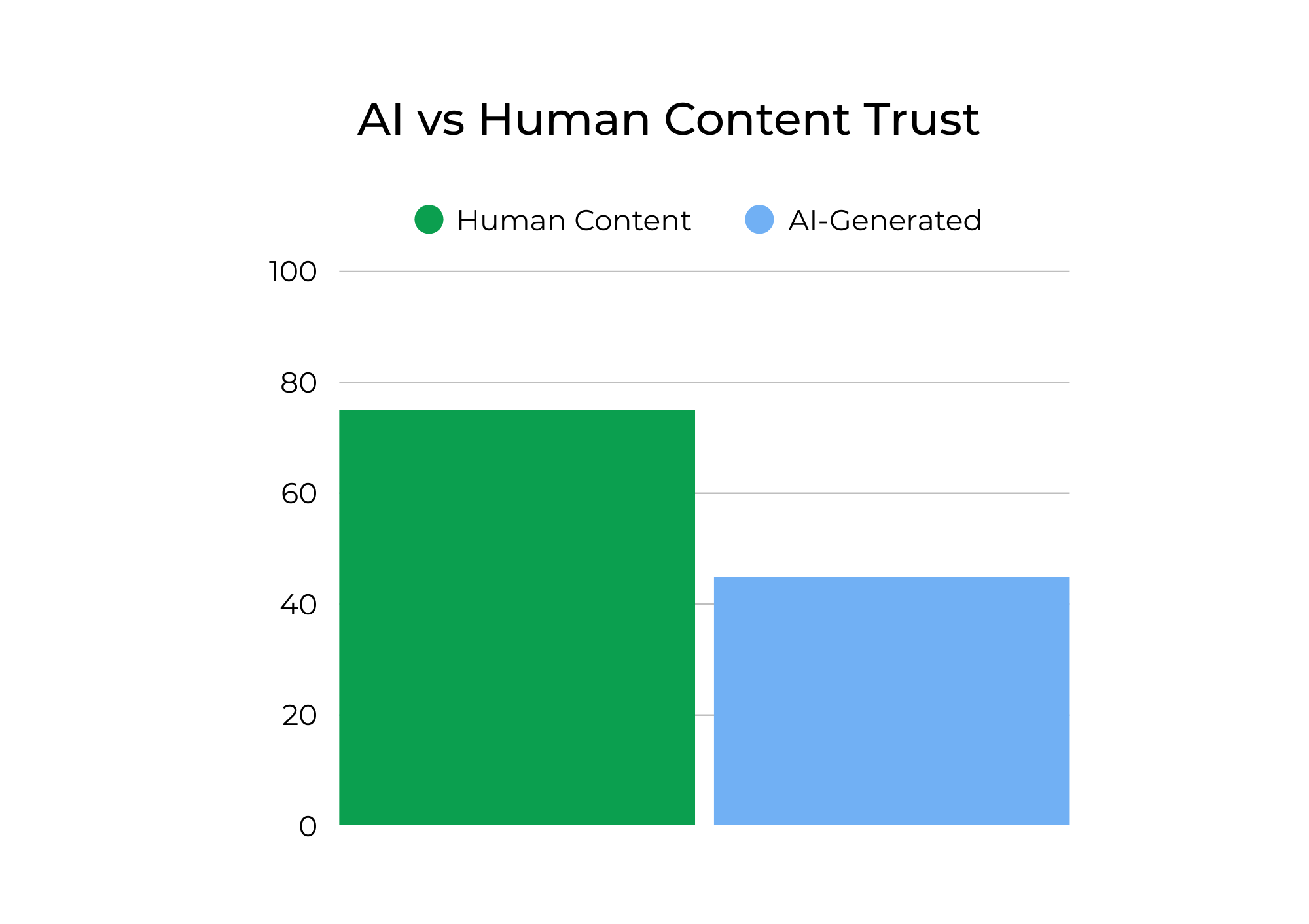
Research supports this instinct, as a study by the Nuremberg Institute for Market Decisions found that consumers rated AI-generated content as less trustworthy and were less likely to engage with it, even when the quality was comparable to human-created material. The label alone triggered skepticism.
"Even technically polished AI content faces a 'trust penalty'—a bias where consumers react warily when they sense a message was created by a machine."
— Nuremberg Institute for Market Decisions, 2024
The same tools that made content production faster have also flooded every channel with material that looks professional but says nothing new. When everyone can publish at scale, volume stops being an advantage. The brands winning attention now are the ones readers actually believe.
We have spent the last year watching how today's buyers decide what content deserves their attention. The companies building authority right now share specific habits: they show their thinking, they cite real evidence, they let identifiable humans stand behind their ideas, and they maintain those standards consistently over time. None of this is new, but a year ago you could skip these practices and still get results. That's no longer true. The companies getting this right are doing a few things differently, and most of it comes down to how they think about proof.
How readers decide what's worth trusting
But before getting into tactics, it's worth understanding what authority actually means now, because the definition has changed. Authority used to mean being the loudest voice in the room. Publish frequently, show up everywhere, and eventually people would assume you knew what you were talking about. That approach worked when content was harder to produce and distribution was limited. It doesn't work anymore.
Today, authority means something more specific. Your audience believes you have genuine expertise on a topic and that you are being honest about what you know. They trust your perspective enough to act on it, share it, or come back for more. The test is simple: Does a reader finish your article and think, "These people actually understand this"?
When readers evaluate whether content is worth trusting, they're asking a few questions, whether consciously or not:
- Who is behind this, and do they have real credentials or experience?
- Can any of this be verified with sources, data, or specific examples?
- Does this organization have a track record of being accurate over time?
- Are they transparent about what they don't know?
Content that answers these questions earns attention, and content that doesn't gets skipped. These four questions also work as a diagnostic tool for your own content.
A framework for evaluating your content's credibility
Here's how to evaluate where you stand on each one.
1. Make your expertise visible
Look at your last five to ten pieces of content. How many have a named author with a real bio or credentials that qualify someone to speak on the topic? If most of your content is published under a company name with no identifiable human behind it, you're asking readers to trust an abstraction. The answer is to attach real people to your ideas and include author bios that go beyond job titles. Let your subject matter experts speak in their own voice when the topic calls for it. If you need help building this into your workflow, our step-by-step guide to content marketing strategy covers how to build expertise visibility into your content workflow.
2. Back claims with real evidence
Review the claims you're making in your content. Are you citing original research, proprietary data, or credible third-party sources? Or are you making assertions that sound reasonable but have nothing backing them up? Weak evidence looks like "studies show" without linking to studies, or "many companies are finding" without naming any. Strong evidence looks like specific numbers, named sources, and links readers can follow if they want to verify. This is where most AI-generated content falls short, and where human-led content can clearly differentiate.
3. Build a track record over time
Authority builds over time. A single insightful article doesn't establish credibility, but a body of work does. Ask yourself whether your content demonstrates a coherent point of view that readers can follow across months or years. Organizations that maintain an editorial archive and reference their own past work signal that they stand behind what they publish.
4. Be transparent about what you know and don't know
The most trusted content acknowledges its limitations. Are you clear about your methodology when sharing data or insights? Do you note when something is opinion versus established fact? Readers have become skilled at spotting content that overstates its certainty. A willingness to say "we don't have complete data on this yet" or "this worked for our clients but may not apply universally" builds more trust than pretending every insight is definitive.
Tactics for building authority across your channels
Now for what to do about it. The guidance below covers the channels where your audience forms impressions and where AI systems gather information they use to answer questions.
AI tools like ChatGPT, Perplexity, and Google's AI Overviews have become places where buyers research solutions before they ever visit your website. These systems pull from sources they evaluate as credible, which means the practices that build trust with human readers also determine whether AI cites your content when someone asks a question in your domain. We wrote about this in detail in our article on what AI means for visibility, credibility, and conversion.
Here's how to approach each channel.
Your website
Your website is where credibility gets tested. It's the destination your other channels point to, and where your claims either hold up or fall apart.
Authorship is the place to start, as every substantive piece should make clear who wrote it and why they're qualified. A bio that says "John leads our product team and has spent 15 years in supply chain software" carries more weight than "John is a marketing manager at Company X."
Sourcing practices matter, too. When you make claims, are you linking to original research, naming specific data points, or referencing credible third parties? Pages that cite their sources signal that the information can be verified. Pages that make assertions without support get skipped, either by skeptical readers or by algorithms evaluating reliability.
Your content architecture also plays a role, so link between related pieces to demonstrate depth. Return to your core topics with new insights rather than treating each post as a standalone effort. AI systems favor sources that show sustained expertise through connected content, and readers do too. Our guide on creating a content marketing plan walks you through the process.
Email and newsletters
Your subscribers have already decided to hear from you, which changes the dynamic. They're not evaluating whether to trust your organization, they're deciding whether this particular email is worth their time.
The mistake most organizations make is using email primarily for announcements and promotions. A newsletter that consistently delivers a useful, specific perspective builds authority with every message, but one that mostly talks about company news gives subscribers a reason to stop opening.
Think about what you can offer that your audience can't easily find elsewhere. This might be original analysis, patterns you're seeing across client work, or a clear perspective on where your industry is headed. You'll know it's working when subscribers open your emails because they've learned to expect something useful.
Voice matters here, as emails from a named person tend to outperform emails from a generic company address. This doesn't mean every send needs to be a personal letter from leadership, but it does mean considering whose perspective you're putting forward and whether that person's voice comes through.
Social media
Authority on social media is built through consistency over time rather than any single post. The organizations that earn credibility on platforms like LinkedIn do so by maintaining a clear perspective and participating in conversations, not by publishing occasionally and hoping something takes off.
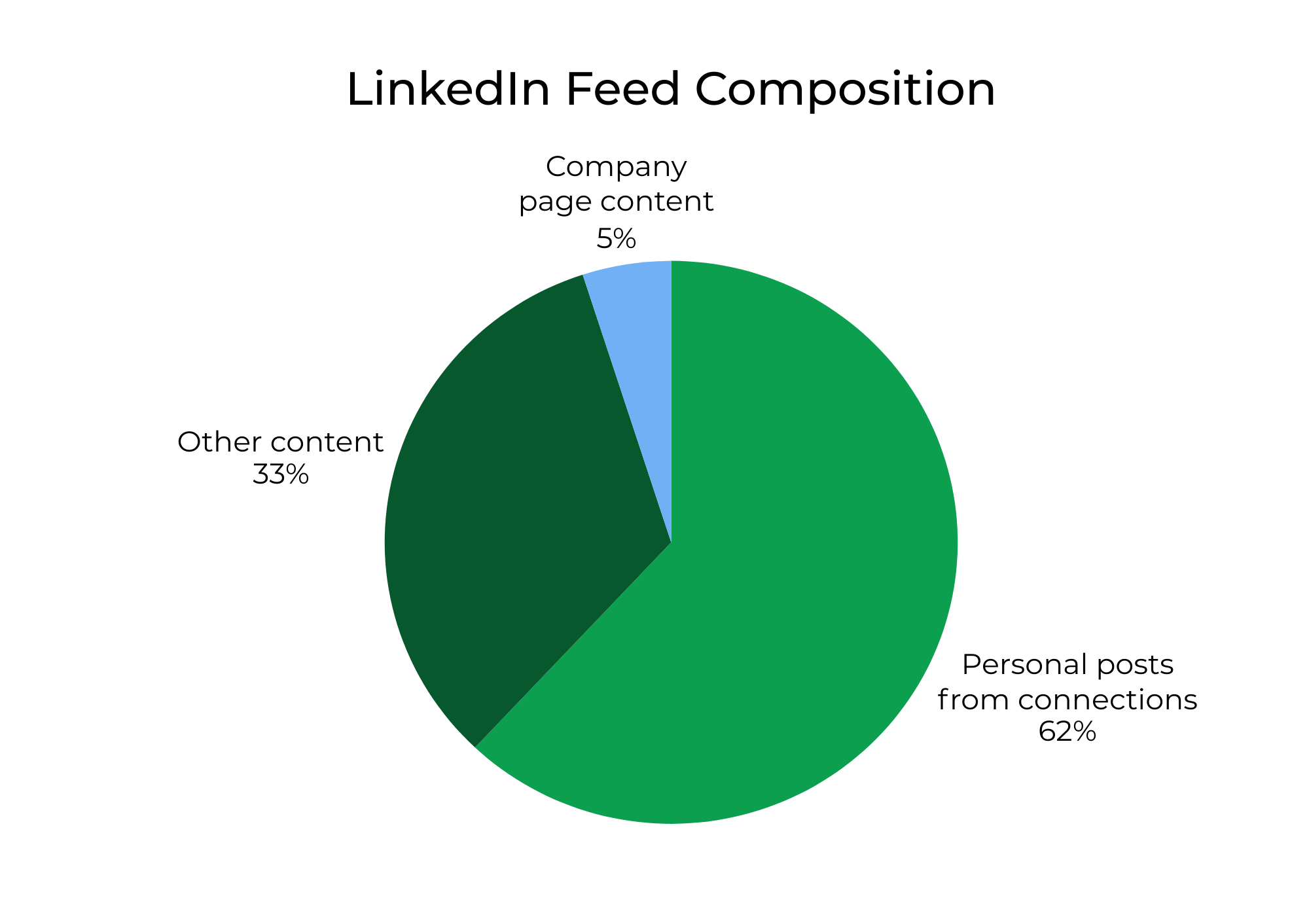
For most B2B organizations, LinkedIn is the platform worth focusing on. The algorithm currently rewards content that reflects real expertise and sparks substantive responses, a trend we covered in our marketing and advertising strategies piece last year. According to Entrepreneur, personal posts from connections now make up 62% of the average LinkedIn feed, while company page content accounts for just 5%. This is why posts from your leaders will almost always outperform posts from your company page.
The most effective approach is to let your subject matter experts lead. Encourage them to share perspectives on their areas of expertise, respond to industry developments, and engage with others in your space. Your company page can amplify their content, but the credibility comes from real people with identifiable experience.
Building trust that lasts
These tactics apply differently depending on your resources and audience, but they point in the same direction. AI has made content easier to produce, but it hasn't made trust easier to earn. The massive amount of generated material has made audiences more skeptical and more selective about what they pay attention to. The brands that will stand out over the next few years are the ones that treat credibility as a priority rather than an afterthought, especially as AI continues to reshape how audiences discover and evaluate content.
The framework above gives you a starting point. Score yourself honestly on expertise visibility, evidence depth, consistency, and transparency. The areas where you're weakest are the ones that deserve attention first. From there, focus on the tactics that fit your resources and your audience's expectations.
Most organizations are still optimizing for volume by publishing more, promoting more, and wondering why engagement keeps declining. The opportunity is in going the other direction: fewer pieces that earn real trust, created by identifiable people who know what they're talking about and are willing to stand behind their ideas.
If you're ready to build a content strategy grounded in credibility and measurable outcomes, that's the work we do at Method Q. We'd love to hear what you're working on.