
Managing paid media has become understandably unmanageable for many B2B advertisers.
What used to feel like a straightforward channel mix now feels more like a constant series of budget decisions, platform tradeoffs, performance questions, and internal pressure to prove every dollar is working harder. Paid media is no longer just about getting campaigns live. It is about making smart investment decisions in an environment that keeps getting more expensive, more fragmented, and more difficult to navigate with confidence.
In 2025, U.S. B2B digital ad spending surpassed $20 billion, with double-digit growth rates projected through 2027. As that investment continues to grow, the real question is not whether to spend on paid media, but where that budget will have the greatest impact.
Three years ago, you could build a reasonable paid media plan around Google Search, a LinkedIn budget, and some display retargeting. The channels were relatively stable and the playbook was simple, but that's changed.
Today, platforms like Google and Meta are pushing AI-driven campaigns that automate most of what marketers used to control manually. LinkedIn has rolled out attribution tools that finally connect ad spend to pipeline revenue. The third-party cookie apocalypse everyone spent years preparing for never fully arrived. But the shift still exposed something important: advertisers that invested in stronger first-party data strategies are in a far better position than those that kept relying on borrowed signals and outdated assumptions.
None of this means you need to scrap your current paid media strategy. It does mean you need to take a harder look at how budget is allocated, what success actually looks like, and which platforms are still earning investment versus benefiting from habit. That is where smarter paid media decisions start.
Settle the Brand vs. Demand Debate Before You Allocate Budget
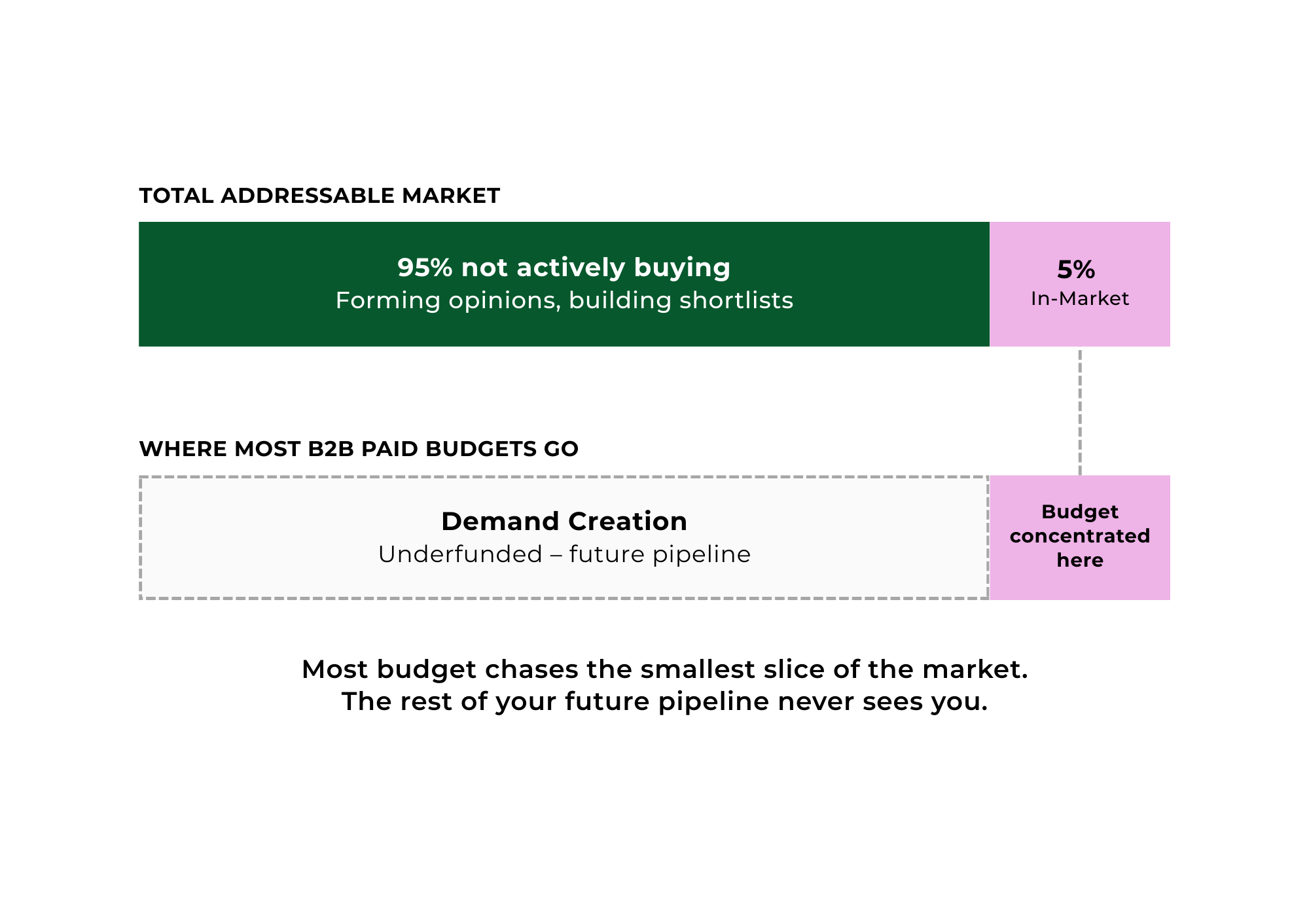
If most of your paid media budget is going to lead generation, you may not have a campaign mix problem. You may have a demand creation problem.
Many B2B advertisers overfund bottom-funnel programs because they are easier to measure, easier to attribute, and easier to defend. Pipeline, form fills, and demo requests create a cleaner story than awareness metrics do. But that does not make them sufficient. When too much budget is concentrated on demand capture, teams end up chasing the same limited pool of in-market buyers while neglecting the visibility and credibility that make conversion possible in the first place.
That is the real brand versus demand gen problem. Brand investment is often treated as optional because it does not produce immediate leads or fit neatly into attribution dashboards. In reality, it is what makes demand gen more effective. Buyers are more likely to engage with companies they already recognize, trust, and associate with relevant expertise. Without that foundation, lower-funnel campaigns have to work harder, cost more, and deliver less efficient results.
In B2B, your paid media strategy has to do two things at once: capture existing demand and build future demand. If you only fund the first, performance becomes harder to sustain, harder to scale, and more expensive over time. The strongest paid media programs separate these investments intentionally. Demand gen budget should be built to convert active intent. Brand budget should be built to increase familiarity, strengthen positioning, and keep your company in front of the right accounts before they are ready to buy. They serve different purposes, require different expectations, and should be measured accordingly.
The goal is not to choose between brand and demand gen. It is to stop expecting one to do the work of both.
LinkedIn Has Become a Stronger Demand Creation Channel and a More Measurable One
LinkedIn has always been valuable for reaching the right professional audiences. What has changed is marketers’ ability to use it more intentionally for demand creation and measure its influence with far more confidence.
For B2B advertisers, LinkedIn is one of the few paid channels built for reaching buying committees before they are actively in market. That makes it especially effective for building familiarity within target accounts, reinforcing positioning, and distributing content that creates preference before a prospect ever fills out a form. Used well, it can support the early and middle stages of the funnel in ways that lead generation campaigns alone cannot.
What makes LinkedIn more compelling in 2026 is that this work is no longer as difficult to defend. LinkedIn’s Conversions API allows advertisers to connect online and offline conversion data to campaign activity, including actions that happen beyond a website session. The platform's expanded revenue attribution capabilities also make it easier to tie campaign engagement back to CRM outcomes like pipeline, influenced revenue, and return on ad spend. For B2B teams managing long sales cycles and multiple stakeholders, that creates a much more complete picture of how LinkedIn is contributing to revenue creation over time.
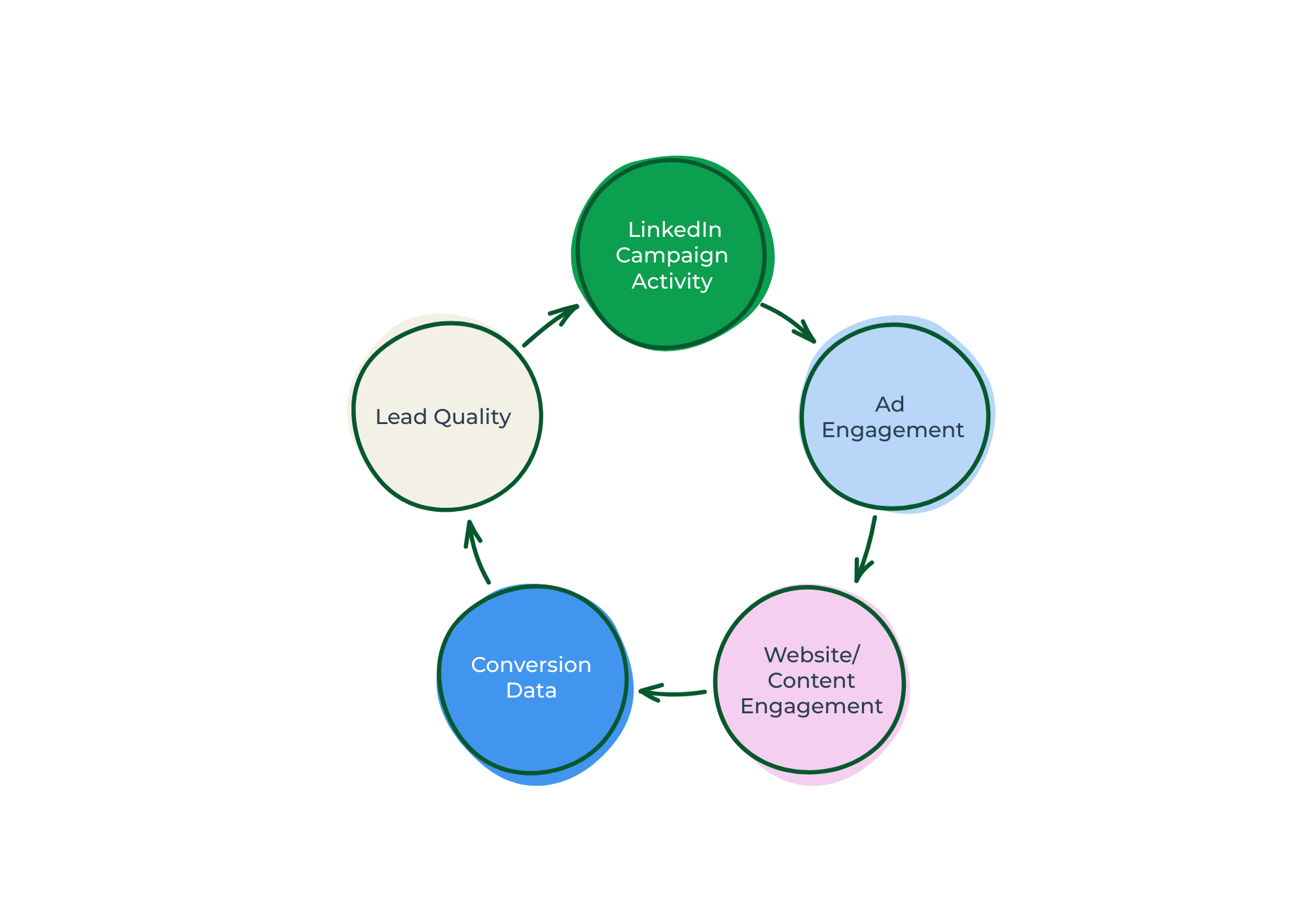
That should change how the channel is used. LinkedIn is at its strongest when it is not forced to behave like a pure lead capture engine. It is better used to create demand within high-value audiences, keep your brand in front of target accounts, and influence deals before purchase intent becomes visible elsewhere. When that strategy is paired with stronger CRM and offline conversion tracking, advertisers can make better decisions about how LinkedIn supports pipeline, where it is creating momentum, and how much investment it is actually earning.
Automation Is No Longer Optional, but Blind Trust Is Also Not a Strategy
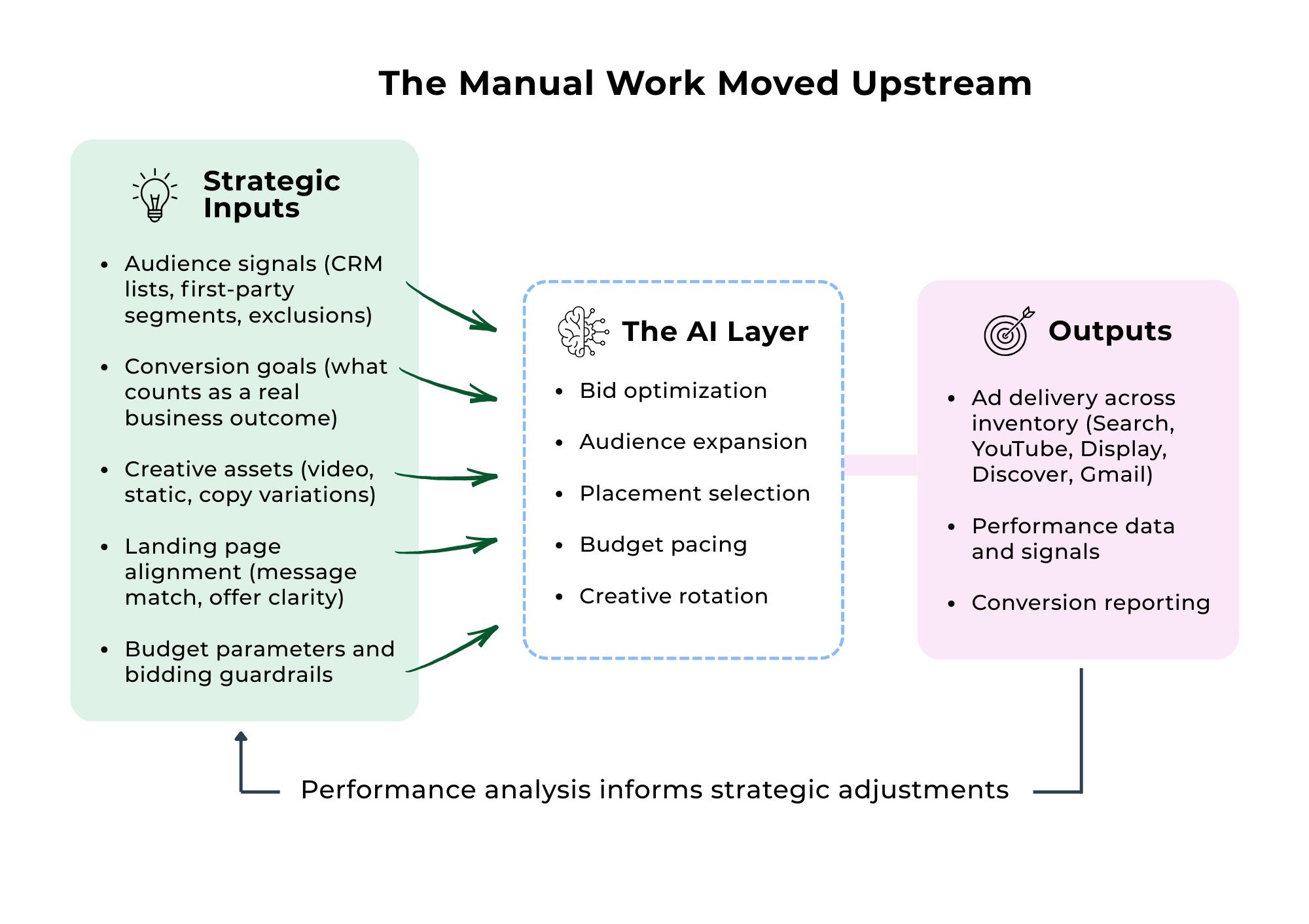
Google Ads is moving further into AI-first execution. Performance Max gives advertisers access to Google’s full inventory from a single campaign, and Demand Gen is expanding automated reach across YouTube, Discover, Gmail, and the Google Display Network. Those formats can absolutely create value for B2B advertisers, especially when the goal is to maintain visibility across a long, multi-touch buying cycle.
Automation may streamline execution, but it increases the importance of the strategy guiding it. That makes strong conversion design, audience strategy, creative quality, landing page alignment, and rigorous performance analysis even more important, not less.
The advertisers getting the most from these emerging AI campaign types are not the ones giving Google unlimited freedom and hoping for the best. They are the ones feeding the system stronger inputs and tighter strategic direction. Google’s own tools rely on marketer-provided signals like audience inputs, creative assets, and conversion goals to guide optimization. When those inputs are weak, automation does not fix the problem. It scales it.
That is the real shift. The manual work is not gone. It has moved upstream. The advantage now comes from knowing what to automate, what to control, and how to keep the platform optimizing toward real business outcomes instead of whatever is easiest for the algorithm to find.
Strengthen First-Party Data, but Keep Your Strategy Grounded in Reality
Google’s reversal on third-party cookies did not make first-party data less important. It just made the conversation less binary.
First-party data is still the strongest signal set most B2B advertisers can build. It is based on real buyer behavior, real account engagement, and real business outcomes. That makes it more valuable than rented third-party signals for measurement, retargeting, suppression, audience quality, and long-term optimization.
But value is not the same as scale. Many smaller advertisers simply do not have enough CRM volume, site traffic, or conversion density to rely on first-party data as the primary input across every campaign. Platforms still need enough data to learn, and narrow audience pools can make campaigns less efficient, not more.
That is why first-party data should be treated as a growth asset, not a magic fix. In some programs, it can power sophisticated audience strategies and better automation. In others, it is more useful as a supporting layer while broader platform signals help maintain reach and delivery.
The right answer is usually a balanced one: use first-party data wherever it improves quality and control, keep building the infrastructure behind it, and do not overstate what it can do before the volume is there.
Rethink What Good Creative Actually Looks Like in Paid Media
Good creative is no longer about production value alone. It is about fit. Fit to the platform, fit to the placement, and fit to the way buyers actually consume content.
That matters more now because video is delivering stronger returns across the mix. HubSpot’s 2026 State of Marketing shows short-form video, long-form video, and live streaming as the top ROI-driving content formats among marketers. For B2B brands, that should be a signal to rethink the old creative playbook, not double down on it.
The strongest paid creative today usually does not look like a traditional ad. It looks native to the environment it is in and gives people a reason to stop scrolling. Meta’s own guidance reinforces that more authentic, platform-native creative often performs better in-feed than overly polished assets built without the placement in mind. That does not mean polished creative is dead. It means polish is no longer the thing that makes creative effective.
The bigger mistake is assuming one hero asset can carry an entire paid program. In most cases, it cannot. B2B advertisers need more usable creative, more often: shorter videos, sharper hooks, clearer points of view, stronger proof, and assets built for specific channels and funnel stages. The brands that win are not always the ones spending the most on production. They are the ones producing creative that is actually designed to perform in paid distribution.
That is good news for B2B teams. You do not need a massive studio budget to compete. You need credible people, clear messaging, and creative built for how the platform actually works. A smart, well-timed video from a subject matter expert will often do more for paid performance than a polished brand asset that was never designed to earn attention in-feed.
Watch the Emerging Channels But Invest Cautiously
A few developments are worth monitoring, and in some cases testing, without committing significant budget to them today.
Connected TV (CTV)
Connected TV advertising is growing as more audiences move to ad-supported streaming tiers on platforms like Netflix, Disney+, Tubi, and Pluto TV. CTV offers targeting capabilities that traditional television never could, and LinkedIn has launched its own Connected TV offering specifically for B2B. The practical threshold: if your total addressable market is broad enough that you're already running brand awareness campaigns on LinkedIn and display, CTV becomes a reasonable test channel for incremental reach.
If you're still working to optimize your core paid channels, it's too early. Start with a small test budget tied to a specific awareness goal, measure against brand lift rather than leads, and give it at least a quarter before drawing conclusions.
Microsoft Ads
Microsoft Ads is also worth considering for B2B teams already running Google Ads. Because Microsoft owns LinkedIn, Bing Ads campaigns can target by LinkedIn profile data, including job title, company, and industry, directly within the ad platform. For B2B advertisers, that integration offers targeting precision that Google can't match on its search network, often at a lower cost per click. While Microsoft Ads have come a long way, it is also critical to monitor for spam and bot traffic, which can eat up considerable budget on this search network if left unchecked.
AI-Powered Search Is Changing Discovery, So Audit Your Visibility Now
AI-powered search is also changing how buyers find and evaluate potential partners. AI Overviews in Google search results, conversational ad formats inside AI assistants, and the growing importance of Answer Engine Optimization (structuring your content to appear in AI-generated results) are all affecting the top of the funnel.
The Content Marketing Institute's 2026 B2B research, a survey of 1,015 B2B marketers published in December 2025, found that content strategy ranks as the top investment priority for the year ahead, with the emphasis moving from content generation to discovery optimization. The immediate action is a quick audit to check whether your highest-value content is structured in ways that AI-driven search can parse, cite, and surface. If your content reads well for humans but is invisible to AI-generated answers, that's a visibility problem you must solve before increasing your ad spend.
Where to Start: A Practical Sequence
Audit your data infrastructure first
If your CRM data is incomplete, outdated, or disconnected from your ad platforms, fix that before increasing spend. Every paid channel performs against the quality of the data behind it, and weak inputs will limit results long before budget does.
Then define your brand-to-demand balance
Do not let lead gen absorb the budget by default just because it is easier to attribute. Set a deliberate allocation for demand creation and demand capture, and protect it. Even a modest shift can improve the efficiency of downstream campaigns over time.
Connect LinkedIn to pipeline and revenue
If LinkedIn is part of your mix, connect campaign activity to CRM outcomes so you can measure influenced pipeline and revenue more clearly. That gives you a better read on whether the channel is building momentum inside target accounts or simply consuming budget.
Test automation with guardrails
If your addressable market is large enough and your conversion tracking is strong, test AI-driven campaign types where they make sense. But do it with clear inputs, clear success criteria, and clear oversight. Automation can improve performance, but only when the strategy behind it is sound.
Rethink your creative production model
Shift budget away from relying on a small number of polished assets and toward a steadier flow of creative built for distribution. Shorter videos, sharper hooks, stronger proof points, and faster iteration will usually do more for paid performance than a single hero asset ever could.
Make Your Media Spend a Compounding Asset
The most important paid media question in 2026 is not how much to spend. It is where your specific budget will create the most business impact based on your goals, your audience, your data maturity, and your sales cycle. The right answer will look different for every company, and it should.
The advertisers that get more from paid media are not the ones chasing the newest platform feature or repeating last year’s budget split by habit. They are the ones willing to assess what is actually working, adjust where needed, and invest in a way that builds momentum over time. That is what turns paid media from a quarterly expense into a compounding growth asset.
Paid media should not feel like a quarterly reset. Method Q helps B2B companies build media plans that create momentum, improve efficiency, and contribute to revenue with more consistency over time. If that is the standard you are aiming for, let’s talk.
Strategic Q&A on Your 2026 Paid Media Budget
How should B2B companies allocate paid media budget in 2026?
B2B companies should allocate paid media budget based on data quality, sales cycle length, audience size, and business goals. Start by fixing CRM and conversion tracking issues, then define a clear balance between brand-building and demand generation. Budget decisions should be based on which channels can create measurable pipeline impact, not just lead volume.
What percentage of B2B ad spend should go to brand awareness vs. demand generation?
There is no universal split, but many B2B companies overinvest in demand generation because it is easier to attribute. A stronger paid media plan includes both demand capture and brand-building. If most of your budget is going to bottom-funnel campaigns, shifting even a portion toward awareness and thought leadership can improve downstream performance over time.
Is LinkedIn advertising worth it for B2B companies in 2026?
Yes, LinkedIn advertising is worth the investment for many B2B companies when it is used for demand creation, account reach, and buying committee visibility. It is especially effective for building familiarity before buyers are actively in market. With better CRM and revenue attribution tools now available, LinkedIn is also easier to evaluate based on influenced pipeline and revenue.
How does first-party data improve B2B paid media performance?
First-party data improves B2B paid media performance by giving ad platforms better signals based on real buyer behavior, CRM activity, and account engagement. It can strengthen targeting, retargeting, exclusions, measurement, and optimization. For smaller advertisers, first-party data may not be large enough to drive every campaign, but it is still one of the most important assets to build over time.
Should B2B companies use Google Performance Max?
B2B companies should use Performance Max when they have enough audience size, enough conversion volume, and strong enough data quality to support automation. It can help extend reach across Google’s inventory and improve efficiency at scale. It is usually less effective for very narrow targeting strategies or accounts with weak conversion tracking and limited signal volume.
How is AI changing B2B paid media strategy?
AI is changing B2B paid media strategy by increasing automation inside ad platforms and changing how buyers discover information online. That makes strategy, data quality, creative inputs, and measurement more important. B2B marketers need to optimize for both platform automation and AI-driven search behavior, especially at the top of the funnel.